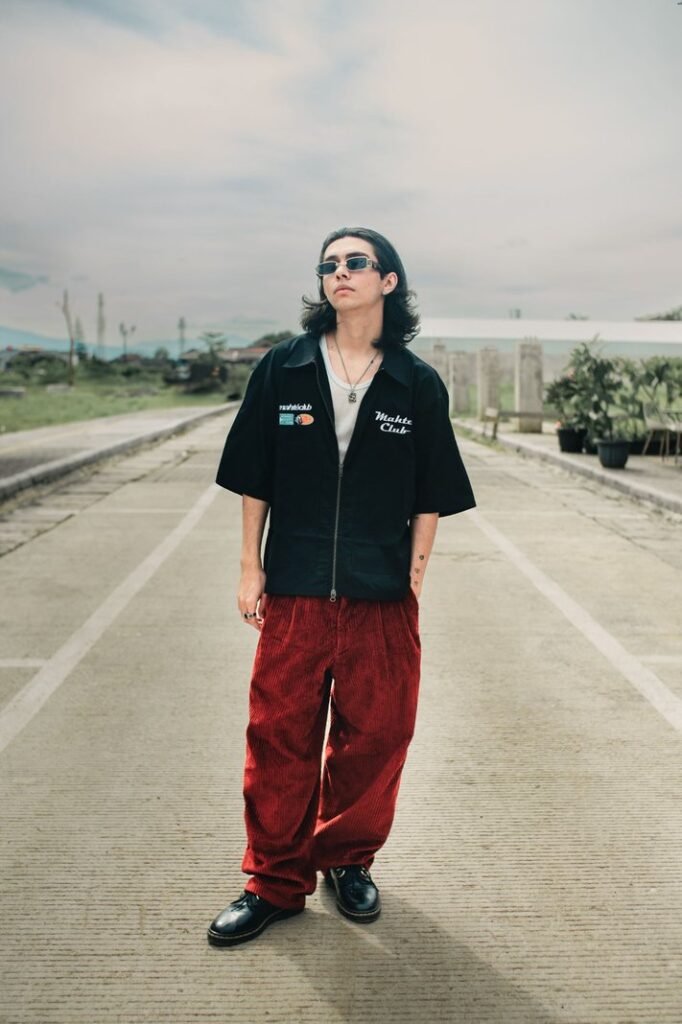

The defining question in contemporary streetwear is no longer whether a garment should be oversized or tailored. It is how intelligently the two can coexist. Across global luxury fashion, designers and consumers are moving between generous draping and precise construction, creating wardrobes in which an oversized hoodie can sit beneath a sharply cut coat, or cropped trousers can provide discipline to an expansive jacket. The tension between volume and structure has become one of the most influential forces shaping modern urban dressing.
American consumers have played an important role in this evolution. The United States has long treated streetwear as a serious cultural category rather than a temporary trend, and its luxury market increasingly expects clothing to accommodate multiple environments. A garment may need to work for commuting, travel, social occasions, creative workplaces, and weekend life without requiring a complete change of wardrobe. That demand has encouraged designer labels to reconsider traditional proportions, blending the comfort of relaxed silhouettes with the sophistication of high-end tailoring.
The result is a more nuanced version of luxury streetwear. Oversized streetwear fashion trends provide movement, attitude, and visual volume; tailored pieces supply definition, refinement, and architectural control. The most sophisticated wardrobes do not choose between them. They use proportion as a styling instrument, allowing fabric, construction, and scale to create an intentionally balanced silhouette.
## The Architecture of Oversized Hoodies and Outerwear
Oversized hoodies and outerwear remain central to contemporary streetwear because they create immediate visual impact without requiring complicated styling. The challenge is that volume can quickly become shapeless if every layer follows the same generous proportion. The modern approach is therefore architectural: oversized pieces should have deliberate shoulders, controlled lengths, and fabrics substantial enough to maintain their intended form.
A heavyweight hoodie in premium French terry, for example, works particularly well beneath a structured wool overcoat or a cropped technical jacket. The hoodie creates softness around the torso while the outer layer establishes a sharper boundary. An oversized leather bomber can follow the same principle when paired with a relatively streamlined knit and straight-leg trousers.
Fabric selection has a profound effect on the silhouette. Heavy French terry creates a dense, rounded drape, while lighter jersey tends to collapse closer to the body. Brushed fleece provides warmth and softness but can create considerable visual bulk. High-quality wool, technical nylon, and premium leather behave differently again, allowing designers to manipulate volume through stiffness, weight, and surface texture.
For an elevated urban aesthetic, color should generally remain controlled when proportions are dramatic. Charcoal, black, cream, navy, muted olive, and rich brown allow the architecture of the garments to become the focus. A minimalist leather handbag or refined watch can provide an additional point of polish without competing with the oversized silhouette.
The objective is not simply to wear something large. It is to make volume look engineered.
## The Precision of Cropped and Tailored Trousers in Street Fashion
If oversized outerwear creates expansiveness, cropped and tailored trousers provide the counterweight. Their importance in modern streetwear reflects the growing influence of high-end tailoring on casual dressing. Instead of pairing a relaxed hoodie with equally relaxed sweatpants, fashion-forward consumers are increasingly introducing trousers with precise waistlines, clean creases, shortened hems, or architectural shapes.
A cropped trouser can be particularly effective beneath an oversized jacket because it exposes more of the footwear and creates a visual break between the substantial upper silhouette and the ground. This makes the outfit feel lighter. Straight or gently tapered trousers offer a similar effect without appearing overly formal.
Material is central to the distinction. Structured denim provides firmness and visual authority, while wool trousers offer softer movement and a more refined surface. Cotton twill can create an intermediate option, delivering durability with enough structure to support a contemporary silhouette. Stretch blends can improve comfort, but excessive elasticity may compromise the crisp appearance that makes tailored trousers effective.
For a sophisticated streetwear formula, consider a generous bomber jacket over a fine-gauge knit, tailored cropped trousers, and premium leather sneakers. Another approach places a relaxed hoodie beneath a sharply cut blazer with slightly shortened trousers and refined loafers. In both cases, the tailoring prevents the outfit from becoming visually heavy.
This is where premium apparel earns its place. Exceptional trousers do not merely fit the body; they control the proportions of everything worn above and below them.
## High-Low Proportion Rules for Modern Silhouettes
The most useful principle in contemporary streetwear is balance through contrast. When one garment expands, another should usually provide definition. This does not mean every oversized item requires a slim counterpart, but the outfit should contain some form of visual discipline.
An oversized coat can work with wide trousers when the layers underneath are relatively clean and the footwear provides a strong foundation. Conversely, a voluminous hoodie can be balanced by straight denim and a structured handbag. A cropped jacket can accommodate wider trousers because the shortened upper layer establishes a clear waistline.
Length is just as important as width. A long oversized coat creates a vertical line that can support wider trousers, while a cropped jacket emphasizes the legs and works particularly well with high-rise denim or tailored pants. When layering multiple garments, each hem should contribute to the composition rather than creating a stack of accidental lines.
The high-low formula also applies to formality. A luxurious tailored coat can become more contemporary when paired with premium sneakers and relaxed denim. Conversely, an oversized sweatshirt can appear sophisticated beneath a cashmere coat and alongside polished leather footwear. This interaction between casual and formal pieces is one of the defining characteristics of luxury streetwear.
Accessories should be used as stabilizing elements. A structured handbag can introduce geometry into a soft outfit, while a compact crossbody can prevent oversized clothing from appearing visually overwhelming. Investment-worthy accessories are especially effective because their construction adds refinement without requiring additional layers.
The most sophisticated streetwear looks therefore feel neither entirely relaxed nor excessively formal. Their tension is intentional.
## Fabric Weight and Draping Dynamics
Proportion cannot be understood without understanding fabric. Two garments with identical measurements can produce radically different silhouettes depending on weight, stiffness, elasticity, and surface texture. In contemporary streetwear, material selection has become an essential part of styling rather than a secondary consideration.
Heavy French terry, for instance, creates a substantial hoodie with a rounded drape and strong presence. Lightweight cotton jersey collapses closer to the body and is therefore easier to layer beneath structured pieces. Structured denim creates clean lines around the legs, while washed or softer denim produces more movement. Wool tailoring can range from sharply architectural to fluid depending on the weave and finishing.
Leather offers another dramatic example. A thick leather bomber creates volume that can hold its shape, while supple lambskin follows the body more naturally. Technical nylon can be lightweight yet visually expansive, particularly when used in quilted or insulated outerwear.
The sophisticated dresser uses these differences deliberately. A heavy hoodie beneath a stiff denim jacket may produce too much density around the upper body, while the same hoodie beneath a fluid wool coat can create a compelling contrast. Similarly, wide-leg trousers in a lightweight fabric can move elegantly beneath a structured jacket, whereas heavyweight denim may require a shorter or more fitted upper layer.
Texture should also be considered. Matte fleece, brushed wool, polished leather, coated denim, and technical nylon reflect light differently. Combining contrasting surfaces allows monochromatic outfits to maintain visual depth.
For consumers investing in premium apparel, fabric literacy is therefore increasingly valuable. Understanding how materials behave can transform a collection of individual garments into a coherent wardrobe.
## Footwear Coordination for Varied Fits
Footwear ultimately determines whether a proportionally ambitious outfit feels grounded. Oversized silhouettes can easily overwhelm delicate shoes, while extremely substantial footwear can make tailored clothing appear unnecessarily heavy. The right relationship depends on the scale of the garments above.
Wide trousers generally benefit from footwear with sufficient visual weight. A premium leather sneaker, substantial loafer, technical runner, or refined boot can create a stable foundation. Cropped trousers offer more flexibility because the shoe becomes a larger part of the overall composition. Sleek loafers or minimalist sneakers can emphasize precision, while chunkier shoes can introduce deliberate contrast.
Oversized outerwear often works particularly well with substantial luxury footwear. A large shearling jacket paired with a narrow dress shoe may create an unbalanced visual triangle, whereas a refined boot or sculptural sneaker gives the lower half enough presence to support the coat.
Material coordination can further elevate the result. Smooth leather footwear against denim creates a classic contrast, while technical mesh or rubber can reinforce the performance character of nylon outerwear. Suede introduces softness beneath structured tailoring, while polished leather can sharpen relaxed knitwear.
The most successful combinations avoid excessive matching. Shoes do not need to duplicate the material or color of the bag or jacket. Instead, they should establish equilibrium. In a monochromatic outfit, a difference in texture may be more effective than a difference in color.
This is why luxury footwear has become such an important component of contemporary streetwear. It is not simply the final accessory; it is the foundation that determines whether the entire silhouette feels intentional.
## The Future Belongs to Fluid Proportion
The new era of streetwear is defined by movement between extremes. Oversized garments provide comfort, cultural familiarity, and dramatic scale, while tailored pieces bring precision, longevity, and the visual authority traditionally associated with luxury fashion. Neither aesthetic is sufficient on its own. Their interaction is where contemporary style becomes most interesting.
For the modern consumer, this fluidity also makes economic sense. A well-constructed oversized coat can be worn over tailoring, denim, knitwear, or athleisure. A beautifully cut trouser can provide sophistication beneath a sweatshirt or a designer jacket. A versatile piece of luxury footwear can move between relaxed and formal environments. The result is an investment-worthy wardrobe in which every purchase performs multiple stylistic roles.
The future of luxury streetwear will therefore belong to consumers who understand proportion as deeply as they understand labels. Designer names and premium materials remain important, but the most sophisticated wardrobe is ultimately defined by how its pieces interact.
Oversized and tailored silhouettes are not opposing philosophies. They are complementary tools. One creates freedom; the other creates discipline. One expands the silhouette; the other gives it direction. When combined with intelligent fabric selection, carefully considered footwear, and restrained luxury accessories, they create the defining visual language of modern urban fashion: relaxed but precise, comfortable but elevated, and unmistakably sophisticated.